
Conductive Distraction and De-escalation Devices in Law Enforcement
How Conductive Distraction and De-escalation Devices such as the G.L.O.V.E. work, how they differ from dart-fired conducted-energy weapons, where agencies are using them, and why close-contact electrical stimulation raises important questions involving force, corrections, medical risk, documentation, supervision, and emerging state regulation.
What this explainer does
Wearable electroshock devices place an electrically active force option directly on an officer's hand. The best-known current product is the G.L.O.V.E.—Generated Low Output Voltage Emitter, manufactured by Compliant Technologies. The manufacturer describes the device as a Conductive Distraction and De-escalation Device, or CD3.
The technology is materially different from a conventional dart-fired conducted-energy weapon. It does not fire probes. It generally requires the officer to be at hands-on distance and to place conductive contact surfaces on exposed skin. The resulting electrical pulses are intended to create intense localized sensory stimulation and a reflexive desire to withdraw or stop resisting.
The central policy question is not simply whether the device is "less lethal." It is when intentionally painful electrical stimulation is objectively reasonable, operationally necessary, medically appropriate, documented, supervised, and preferable to available alternatives.
Conductive distraction and de-escalation devices moved from a niche law-enforcement and corrections technology into national attention after U.S. Immigration and Customs Enforcement awarded a $16.7 million contract in August 2026 for approximately 6,000 pairs.
California then advanced AB 2760, legislation that would temporarily prohibit law-enforcement use of wearable electroshock devices in the state and require a California Department of Justice study of their safety and community impacts.
1. Overview
A wearable electroshock glove combines an ordinary hands-on control platform with electrically conductive contact surfaces that can be activated when an officer is already close enough to touch a subject.
The G.L.O.V.E. is designed to remain on the officer's hand during routine tasks and transitions. According to the manufacturer, officers can use radios, handcuff, conduct pat-downs, drive, retain equipment, and transition to other force options while wearing the device.
That design creates both an operational advantage and an accountability challenge. The officer does not necessarily need to draw a separate device before applying electrical stimulation. Conversely, a body-worn camera or outside observer may not be able to determine from appearance alone whether the electrical function was activated during a physical struggle.
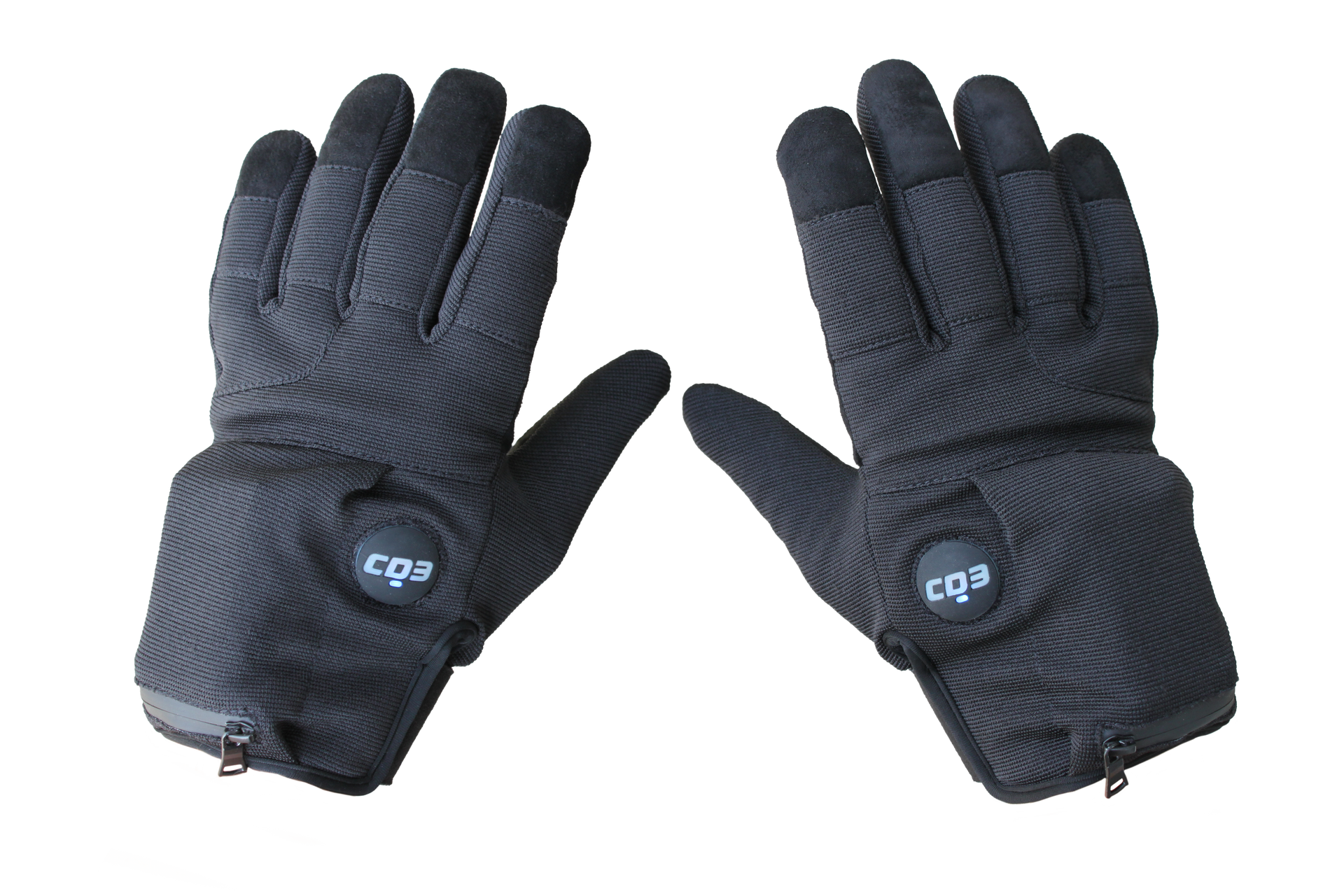
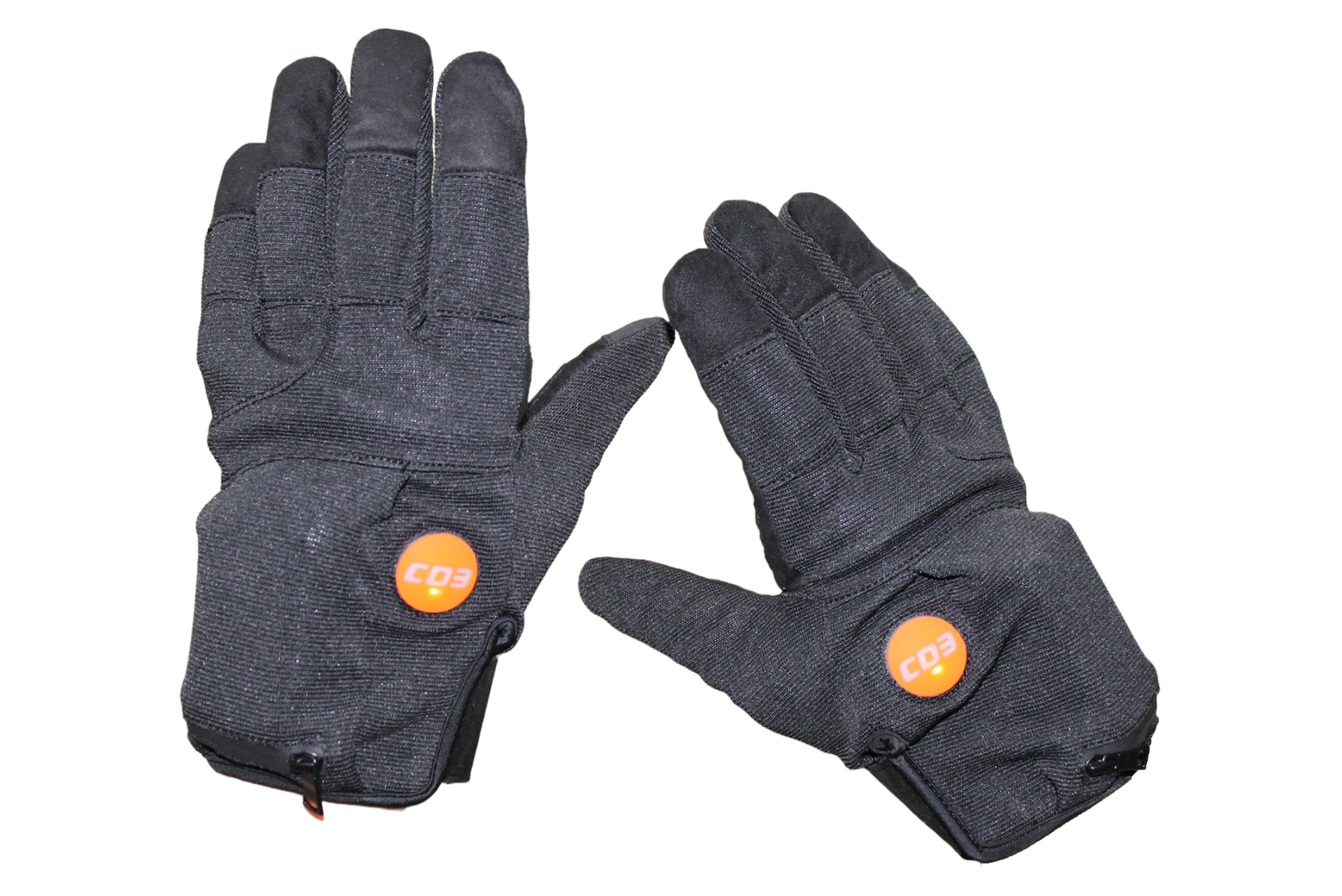
2. What the G.L.O.V.E. Looks Like
The current CT-G5 resembles a substantial tactical glove. Conductive contact areas are integrated into the palm and fingers, while the activation control and electronics are located near the wrist.
3. How the Technology Works
The G.L.O.V.E. does not fire electrical probes through the air. It works at contact distance by completing a circuit across exposed skin through conductive contact areas built into the glove.
Step 1 — The officer wears the glove as an operational glove
The device is intended to remain on the user's hand rather than being carried only as a holstered force option. According to the manufacturer, the user can continue many normal law-enforcement tasks while the glove is worn.
Step 2 — The electrical function is armed at the wrist
On the current CT-G5, the manufacturer states that the user presses and holds a pressure switch on the wrist for approximately one second. The switch illuminates when the device is active. A separate standby mode allows the device to remain ready without delivering stimulation.
Step 3 — Conductive areas must contact exposed skin
Conductive pads on the palm/finger area are designed to contact skin. The manufacturer states that the device intentionally operates at output levels that generally do not penetrate ordinary clothing, hair, metal, or fur. This means an officer may be able to grasp clothing or equipment without automatically applying electrical stimulation, but the desired electrical effect generally requires accessible skin.
Step 4 — The circuit is completed across the skin surface
According to Compliant Technologies, electrical pulses travel superficially across the skin between conductive contact areas rather than using dart probes to create a current path through the body. The company describes the intended effect as Neuro Peripheral Interference (NPI).
Step 5 — Intense sensory stimulation is intended to interrupt resistance
The manufacturer says the rapid sensory input produces a reflexive response to retreat from or stop the source of stimulation. Operationally, this makes the technology more analogous to a contact pain-compliance or conductive-distraction tool than to a probe-deployed neuromuscular-incapacitation system.
4. Current CT-G5 Specifications
The following specifications are manufacturer-published values for the CT-G5 as of August 2026. They should be confirmed against the model actually purchased because specifications and firmware can change.
| Feature | CT-G5 Manufacturer Specification | Operational Significance |
|---|---|---|
| Activation | Approximately one second through a switch located on the glove | The electrical function can be activated without drawing a separate device. |
| Battery | 3.7-volt lithium-ion | The glove contains an onboard power source and requires charging/maintenance controls. |
| Charge time | Approximately two hours | Agency procedures should address charging, inspection, and readiness. |
| Operating endurance | Approximately 90 minutes of continuous stimulation; approximately 12–24 hours in standby mode | Endurance figures are not recommended application durations; the manual separately limits a Level 2 activation to no more than 15 seconds. |
| Voltage | Published range approximately 324–362 volts; manufacturer states it cannot exceed 380 volts | Voltage alone does not determine physiological effect; pulse characteristics and current also matter. |
| Maximum current | Published range approximately 0.7–1.2 amps | Agencies should rely on qualified technical review rather than comparing devices by voltage alone. |
| Pulse duration | Approximately 114–116 microseconds | Short electrical pulses are repeated rather than delivering continuous direct current. |
| Pulse charge | Approximately 72.4–111.7 microcoulombs | Pulse charge is one of the electrical parameters that must be evaluated alongside current, duration, repetition rate, and contact path. |
| Pulse repetition rate | Approximately 29–30 pulses per second | Repeated pulsing produces the sensory effect during contact. |
| Duty cycle | Approximately 0.348 percent | The electrical output occurs in short pulses rather than as uninterrupted current. |
| Operating temperature | Approximately 14°F to 122°F (−10°C to 50°C) | Storage, vehicle assignment, inspection, and deployment practices should account for environmental limits. |
| Special features | Smart Touch Finger, Stand-by Mode, Event Recording Capability | Event records may become important for force reporting, supervisory review, litigation, and discovery. |
5. Wearable CD3 Device vs. Dart-Fired Conducted-Energy Weapon
| Issue | Wearable Electroshock Glove | Dart-Fired CEW |
|---|---|---|
| Typical range | Hands-on/contact distance | Can be deployed from a distance |
| Connection to subject | Conductive glove surfaces contact exposed skin | Probes/darts may establish electrical contact remotely |
| Primary operational concept | Conductive distraction/pain compliance during physical contact | Varies by mode; may include neuromuscular incapacitation or localized pain compliance |
| Visual indication of use | May be subtle during a struggle | Deployment and wires/probes are often more visually apparent |
| Need to draw a separate device | No, if already worn and active | Usually yes |
| Clothing penetration | Manufacturer says effective contact generally requires exposed skin | Darts may penetrate some clothing depending on deployment |
| Accountability concern | Activation may be difficult to reconstruct without electronic event logs and reporting | Probe deployment, cartridge evidence, device logs, and video may create multiple evidence sources |
6. A Typical Operational Sequence
7. Potential Law-Enforcement and Corrections Uses
An officer already engaged physically with an actively resistant person may have another option before escalating to a higher level of force.
Correctional agencies may consider the device during movement of disruptive or resistant prisoners when policy permits.
A trained extraction team may use the glove as part of a coordinated hands-on control plan rather than as a stand-alone tactic.
Because the glove remains on the officer's hand, the officer may retain access to other equipment while using hands-on tactics.
Some correctional contexts may involve use during movement of combative persons, subject to restraint and prohibited-use rules.
The device may provide an intermediate option during a rapidly changing struggle where officers must continuously reassess force.
Manufacturer operational limits
The manufacturer's March 2021 manual and its current Generation 3/4 and Generation 4/5 product guides state that the technology is not risk free. The guides require training and qualification, describe a two-year user-certification period, limit simultaneous application to no more than two gloves on one person, and recommend no more than 15 seconds of activation for the guides' Level 2 rules-of-engagement event.
The guides recommend announcing “G.L.O.V.E. ON” to other officers, having an additional officer available to handcuff when feasible, giving the person a reasonable opportunity to comply, and remaining prepared to transition to another force option or disengage if practical. These are manufacturer instructions—not a substitute for agency policy, governing law, or incident-specific judgment—but they establish an important baseline for training and review.
8. Constitutional Use-of-Force Framework
There is not yet a mature body of appellate case law specifically addressing wearable electroshock gloves. Existing constitutional force principles therefore provide the primary framework.
Arrests and investigatory detentions
Force used during an arrest or investigatory detention is generally evaluated under the Fourth Amendment's objective-reasonableness standard. Under Graham v. Connor, courts consider the totality of the circumstances, including the severity of the offense, whether the person poses an immediate threat, and whether the person is actively resisting or attempting to evade arrest by flight.
The fact that a manufacturer or agency labels a device "nonlethal," "less lethal," "de-escalation," or a low-level force option does not itself establish that a particular use was reasonable.
Pretrial detainees
Under Kingsley v. Hendrickson, force against a pretrial detainee is evaluated under an objective Fourteenth Amendment standard. Relevant circumstances include the relationship between the need for force and the amount used, the extent of injury, efforts to temper force, the security problem confronting officers, the threat reasonably perceived, and whether the detainee was actively resisting.
Convicted prisoners
Eighth Amendment doctrine governing convicted prisoners asks whether force was applied in a good-faith effort to maintain or restore discipline or maliciously and sadistically to cause harm. Repeated painful stimulation after control has been achieved would therefore present a very different issue from a brief application during an ongoing assaultive struggle.
9. Passive Resistance May Be the Hardest Policy Question
A major point of controversy is whether a pain-producing electrical device should be authorized when a person is refusing to cooperate but is not assaultive and does not present an immediate threat.
Michigan's 2026 correctional pilot expressly permits trained staff to use stun gloves for specified situations involving both passively and actively resistant prisoners. That policy choice demonstrates why agencies should not simply import a generic definition of "resistance" into a glove policy.
Mere refusal to follow instructions ordinarily presents a weaker governmental need for intentionally painful force than active physical resistance.
Going limp, holding onto an object, or refusing to move may require physical control, but the proportionality of electrical pain compliance must be separately assessed.
Pulling away, fighting control, attempting escape, or assaultive conduct may materially increase the governmental interest in immediate control.
10. Corrections Presents Distinct Issues
Jails and prisons are a natural market for wearable contact-control technology because staff frequently work at close distance, conduct escorts, manage cell doors and food slots, perform extractions, and control prisoners in confined spaces.
Michigan's Department of Corrections authorized a pilot at five facilities beginning January 1, 2026. The memorandum classifies stun-glove use as non-deadly force and permits trained personnel to use the device in specified contexts including escorts, transportation of disruptive prisoners, food-slot incidents, cell extractions, and control of passively and actively resistant prisoners.
Importantly, the Michigan memorandum also prohibits use on a prisoner in four-point restraints, a safety net, or a mobility-restricted emergency restraint chair.
Electrical stimulation becomes increasingly difficult to justify as the person's ability to resist, flee, or threaten others is reduced by restraints.
Planned operations permit advance supervision, medical review, team assignments, video documentation, and defined stop conditions.
A pain-producing device must never become an informal disciplinary measure or a tool used to punish disrespect, verbal defiance, or past conduct.
11. Medical and Safety Questions
Compliant Technologies states that its CD3 technology uses low-output electrical pulses on the surface of the skin and reports no documented injuries directly caused by proper use of the technology since introduction. Those claims are relevant vendor information, but they are not a substitute for independent medical evaluation.
Agencies should separately evaluate risks associated with the electrical exposure, the underlying struggle, falls, restraint, excited or agitated behavior, intoxication, preexisting medical conditions, pregnancy, age, implanted devices, repeated exposures, and prolonged contact.
The manufacturer's manuals are more guarded than a simple “no documented injury” summary might suggest. They warn that CD3 technology is not risk free; states that any force, including CEW use, may cause or contribute to death or serious injury; identifies longer exposure as increasing potential risk; advises against use on older adults, small children, pregnant persons, persons with severe disabilities, and persons with obvious health conditions; and cautions against operation around flammable substances.
The current guides use the term Agitated Chaotic Event (ACE), described as replacing the older “excited delirium” terminology, and state that the manufacturer does not prescribe a CD3 protocol for an ACE or a suicidal person. Agencies should not treat either label as a medical diagnosis or as an independent justification for force. Policy should instead focus on observable conduct, objective threat, medical distress, prompt clinical response, and the governing constitutional standard.
What the 2019 IEEE conference paper establishes—and what it does not
A 2019 IEEE Engineering in Medicine and Biology Society conference paper tested four earlier-model G.L.O.V.E. devices. The authors measured output across simulated loads, used fresh skinned animal tissue to estimate an operational impedance range, and tested a two-glove resistive-network scenario intended to simulate a current path across the body. They reported maximum voltage of 210–320 volts, maximum current of 0.9–1.5 amps, pulse charge of 84–125 microcoulombs, pulse duration of 105–115 microseconds, and a repetition rate of 29.7–30.8 pulses per second.
The authors concluded that the measured outputs were within relevant safety and efficacy requirements drawn from UL 69, IEC 60335-2-76, IEC 60479-1 and -2, and ANSI/CPLSO-17. They also concluded that the tested outputs fell within the IEC “no fibrillation” region, including their simulated two-glove scenario for stimulation lasting up to 15 seconds.
Even if a single brief use has a favorable risk profile, repeated or prolonged stimulation may present materially different medical and legal questions.
A reflexive movement, fall, collision, or struggle can produce injury even where the electrical mechanism itself causes no tissue injury.
Agencies should define medical contraindications and heightened restrictions rather than leaving them to ad hoc field judgment.
12. Documentation, Body-Worn Camera, and Event Data
The glove's most distinctive accountability problem is that electrical activation may not be visually obvious during hands-on contact.
A body-worn camera may show an officer gripping a subject without revealing whether electrical stimulation was active. That makes electronic event records, detailed force reporting, and supervisory reconciliation unusually important.
The 2021 manual states that the device's removable event-storage media can record the date and precise start and stop times of a contact event, can retain thousands of events, and should be downloaded at least quarterly to secure storage. A quarterly schedule is only a maintenance floor: after any reportable use, agencies should promptly preserve the relevant device data under a documented chain-of-custody process rather than risk later overwrite, loss, reassignment, or a mismatch between the device and the incident.
| Record | Why It Matters |
|---|---|
| Device event log | May establish activation time, duration, event count, or other model-specific information. |
| Body-worn camera | Shows the surrounding resistance, officer actions, warnings, restraint status, and post-use condition. |
| Force report | Explains why electrical stimulation was selected and what effect it produced. |
| Medical record | Documents complaints, examination, treatment, and potential adverse effects. |
| Supervisor review | Reconciles officer narrative, video, event data, witness accounts, and policy requirements. |
| Training record | Establishes whether the user was currently trained for the model and policy in effect. |
13. Federal Decisions and Kentucky Litigation
Publicly accessible federal opinions and docket indexes reveal two distinct federal lawsuits involving the G.L.O.V.E.—both filed in Kentucky—and one resulting Sixth Circuit decision. A separate wrongful-death action involving Johnathan Mansfield is pending in Kentucky state court. As of this review, no additional G.L.O.V.E.-specific case was located in another federal circuit or district.
Elswick v. Derrough: The First Federal Appellate Decision
In Elswick v. Derrough, No. 3:23-cv-00033 (W.D. Ky.), a pretrial detainee brought a 42 U.S.C. § 1983 action against a Bullitt County deputy alleging excessive force and deliberate indifference. The record described five G.L.O.V.E. shock applications while deputies attempted to remove the detainee's handcuffs and leg restraints. The district court granted summary judgment to the deputy on June 10, 2025.
The Sixth Circuit affirmed in an unpublished opinion on January 21, 2026. Applying the objective-reasonableness factors from Kingsley v. Hendrickson, the court emphasized the detainee's active resistance, the officer's knowledge of his earlier violent conduct, attempts at verbal de-escalation, the perceived security threat, and the absence of evidence that reported minor burns required medical treatment. The court concluded that the deputy's use of the device was not objectively unreasonable and that he was entitled to qualified immunity.
Belcher v. Johnson County Kentucky Sheriff's Department
A second federal civil-rights action, Belcher v. Johnson County Kentucky Sheriff's Department, No. 7:22-cv-00039 (E.D. Ky.), was filed by a pro se plaintiff on May 3, 2022. The named defendants included the sheriff's department, two individuals, and Compliant Technologies. The publicly available docket indicates that the claims against Compliant Technologies and one individual were dismissed with prejudice for failure to prosecute and that the action ended without a substantive judicial ruling on G.L.O.V.E. use, product safety, or manufacturer liability. No related appellate decision was located.
The Mansfield Wrongful-Death Action
The most serious publicly reported controversy involving the technology concerns Johnathan Mansfield, who was detained at the Madison County Detention Center in Kentucky and later died after force encounters involving both a G.L.O.V.E. and a Taser. Unlike Elswick and Belcher, the Mansfield action was filed in a Kentucky state circuit court; it is not a federal district-court or Sixth Circuit case.
Public reporting concerning the family's lawsuit alleges numerous G.L.O.V.E. activations and Taser exposures, including allegations of unusually long glove applications. Those allegations have become central to the public debate over repeated and prolonged electrical pain-compliance force.
For agencies, the broader lesson exists regardless of the eventual case outcome: duration and repetition can transform the legal analysis of a force option. A device that may be reasonable for a brief application during active resistance may become difficult to justify if stimulation continues after the person is controlled or is applied repeatedly without reassessing necessity.
14. ICE Procurement Changes the Scale of the Issue
In August 2026, U.S. Immigration and Customs Enforcement awarded a $16.7 million contract for approximately 6,000 pairs of electric shock gloves. Reuters reported that the planned deployment followed earlier concerns from civil-rights advocates regarding the technology and its potential use in immigration enforcement.
A procurement of this scale changes the policy environment. What had been a relatively limited local and corrections technology could become a widely deployed federal use-of-force system used during arrests, detainee movement, and other physical encounters.
15. California AB 2760
California AB 2760 is one of the first state legislative responses directed specifically at wearable electroshock devices.
The August 28, 2026 Senate-amended version would, until January 1, 2030, prohibit a law-enforcement agency—including, by the bill's terms, a federal law-enforcement agency—from using a wearable electroshock device within California. It would also prohibit state and local agencies from using state funds to purchase such a device and require those agencies to update their use-of-force policies accordingly.
The bill would direct the California Department of Justice to study the safety and community impacts of wearable electroshock devices and provide recommendations for standards and safeguards, with a report due by January 1, 2029.
16. Can a State Prohibit Federal Officers from Using the Device?
AB 2760's treatment of federal officers creates a legal question separate from California's authority over state and local law-enforcement agencies.
Federal supremacy and intergovernmental-immunity principles generally limit a state's ability to directly regulate the manner in which federal officers perform federal duties. The precise analysis would depend on the enacted language, enforcement mechanism, federal authority involved, and any resulting litigation.
A court could therefore treat two portions of the same law differently: California's prohibition as applied to state and local agencies may stand on substantially different constitutional footing from an attempt to regulate ICE or other federal officers.
17. Governance Framework for Agencies Considering the Technology
Identify the operational gap the glove is intended to solve and why existing tactics or equipment are inadequate.
State where the device belongs within agency force policy and what level of resistance or threat is required.
Address restrained persons, passive resistance, punishment, sensitive populations, crowd settings, flammable environments, and other foreseeable misuse.
Require reassessment and define when continued or repeated stimulation is prohibited.
Obtain independent review of the exact model, electrical characteristics, contraindications, and post-use protocols.
Train on law, policy, hands-on tactics, transitions, skin-contact limitations, medical issues, reporting, and scenario-based judgment.
Determine exactly what the device records and how logs are downloaded, secured, retained, audited, and associated with an incident.
Require reconciliation of event logs, BWC, officer reports, medical information, witness accounts, and restraint status.
Track whether adoption actually reduces injuries, higher levels of force, staff assaults, or other defined outcomes.
Establish immediate review procedures for injury, hospitalization, prolonged use, repeated applications, or other significant events.
Address firmware, hardware revisions, training changes, warranty, data software, security, and specification changes.
Reassess policy as case law, state legislation, medical research, and field-use data develop.
18. Questions Every Agency Should Answer Before Adoption
19. What Comes Next
If California enacts a prohibition, other states may consider bans, temporary moratoria, POST standards, reporting requirements, or medical safeguards.
Large-scale ICE use could rapidly produce operational statistics, force reports, adverse events, litigation, and policy revisions.
Courts will eventually determine how existing electrical-force and pain-compliance precedent applies to wearable contact devices.
Agencies may increasingly demand tamper-resistant activation records that can be synchronized with body-worn-camera and incident data.
Independent study will be important in distinguishing marketing claims from validated risk profiles across populations and use patterns.
Gloves may become the first major example of a wider category of force systems integrated into clothing, restraints, shields, or other wearable equipment.
20. Key Terms
21. Related ShieldPST.ai Resources
Place wearable electrical-force systems within broader force-technology, training, documentation, and accountability frameworks.
Open resource →Connect emerging public-safety technology to constitutional, statutory, policy, evidence, privacy, and governance questions.
Open resource →Review how BWC evidence, metadata, analytics, and supervisory systems affect reconstruction and review of force events.
Open explainer →Explore retention, metadata, audit logs, discovery, access controls, and preservation of technology-generated records.
Open explainer →Apply procurement, validation, oversight, change-management, and review principles to emerging technology programs.
Open resource →Return to the Shield Technology Reference Library.
Browse explainers →22. Selected Authoritative and Primary Sources
Manufacturer description, current CT-G4 and CT-G5 electrical specifications, activation information, battery information, and event-recording capability.
Review manufacturer specifications
Manufacturer explanation of activation, direct-skin contact, conductive pads, standby mode, claimed mechanism of action, and safety representations.
Review manufacturer FAQ
Manufacturer instructions concerning training and recertification, operating limits, medical cautions, vulnerable populations, tactical coordination, event-data retention, prohibited uses, and post-incident response.
Review 2021 user manual
Current manufacturer guide for earlier models, including model-specific specifications, training-device output, pre-operational inspection, micro-SD event records, operating restrictions, medical cautions, tactical guidance, maintenance, and decontamination.
Review Generation 3 & 4 guide
Current manufacturer guide distinguishing CT-G4 and CT-G5 specifications, reduced-output training models, CT-G5 standby and event-recording functions, operating limits, medical cautions, tactical guidance, maintenance, and post-incident reporting.
Review Generation 4 & 5 guide
Bench testing of four earlier-model devices and comparison of measured electrical output with selected UL, IEC, and ANSI/CPLSO standards. DOI: 10.1109/EMBC.2019.8857344. The paper includes manufacturer-related author disclosures and should not be treated as clinical field-safety research or third-party product certification.
Review IEEE paper record
Official Michigan correctional policy establishing a five-facility stun-glove pilot, use classifications, permitted contexts, training requirements, reporting rules, and restrictions involving certain restraints.
Review Michigan policy
Official bill history and text for California legislation concerning wearable electroshock devices.
Review AB 2760
Reporting on ICE's August 2026 award of a $16.7 million contract for approximately 6,000 pairs of wearable conductive-distraction devices and the resulting national debate.
Review Reuters report
Foundational Fourth Amendment objective-reasonableness framework for force used during arrests and investigatory detentions.
Review Graham
Objective Fourteenth Amendment standard governing excessive-force claims by pretrial detainees.
Review Kingsley
Eighth Amendment framework addressing force used against convicted prisoners, including whether force was applied in good faith to maintain or restore discipline or maliciously and sadistically to cause harm.
Review Hudson
Unpublished January 21, 2026 opinion affirming summary judgment for the deputy and applying the Kingsley objective-reasonableness factors to five G.L.O.V.E. shock applications during active resistance.
Review Sixth Circuit opinion
June 10, 2025 memorandum opinion granting summary judgment on the plaintiff's excessive-force and deliberate-indifference claims.
Review district-court decision
Federal docket for the pro se civil-rights action naming Compliant Technologies; the case ended without a substantive ruling concerning G.L.O.V.E. use or safety.
Review federal docket
Current training-partner webpage containing the “0 Court Cases in 6 Years” marketing statement discussed in the litigation section.
Review training-partner webpage
Secondary reporting describing allegations involving G.L.O.V.E. and Taser use at the Madison County Detention Center. Allegations remain subject to litigation and should not be treated as adjudicated findings.
Review reporting
23. Key Takeaways
- The G.L.O.V.E. is a wearable, close-contact electrical force device rather than a dart-fired conducted-energy weapon.
- The officer activates the current device through a wrist control; stimulation generally requires conductive contact surfaces on the glove to contact exposed skin.
- The manufacturer's current CT-G5 uses low-duration electrical pulses and includes standby and event-recording capabilities.
- The manufacturer describes the technology as CD3—Conductive Distraction and De-escalation—and characterizes the intended effect as Neuro Peripheral Interference. Those physiological and safety descriptions should be independently evaluated.
- The glove's principal legal significance is its use as a pain-producing electrical control option during hands-on encounters.
- Existing Fourth, Fourteenth, and Eighth Amendment force principles remain applicable even though appellate case law specifically addressing shock gloves is still developing.
- The Sixth Circuit's unpublished Elswick decision upheld five applications during active resistance on its particular record; it is not a general declaration that G.L.O.V.E. use is always reasonable or medically safe.
- Passive resistance, restrained persons, duration, repeated applications, and use after control is achieved are likely to become central legal and policy issues.
- Because activation may not be obvious on body-worn-camera footage, electronic event logs and detailed force reporting are unusually important.
- Corrections agencies should specifically address use during escorts, cell extractions, transport, restraint-chair events, four-point restraints, and other controlled settings.
- ICE's $16.7 million procurement for approximately 6,000 pairs has transformed the technology from a niche product into a national policy issue.
- California AB 2760 could become an important model—or counterexample—for other states considering bans, moratoria, standards, reporting requirements, or medical review.
- The governing procurement question should be: what legal, operational, medical, training, reporting, and accountability framework must exist before this technology is placed on an officer's hand?